Sunday, 17 August 2014

Monsoons, midgets and trombones...


2014
Snab
Brize
January
34.5
155.2
February
42.5
105.7
March
21.0
56.6
April
23.4
62.7
May
58.1
80.5
June
76.6
47
July
58.1
29.7
2014 to date
314.2
537.4

Memories of those droughty days of spring draw ever distant. The Moray Monsoon weather pattern seems to becoming ever more prominent - a vote for independence from the rather passé maritime temperate ethos of high winter rainfall afflicting the rest of the UK.  In a period of 24 hours on 10-11 August, we had a further 155mm, which you can see is more than the total for the 4 months to April. Good for the pumpkins, not so good for getting in your onions.


It's times like this that the polytunnel earns its keep, fooling the plants into thinking they are thriving in a hot, dry but humid, windless wonder climate.

There's my Minnesota Midget melons...
 and my rampant tromboncini, which can be relied on to raise a smile...
and my cobs ready for plucking...
and my shapely swelling borlotti...


and my dangling aubergines - which are popular with the local epicurean vole population, who are apparently partial to a baba ganoush appetiser to their main meal of slightly underripe strawberries.

And it provides a shelter for one's onions away from the mayhem of the Moray Monsoon,
 
but not by any means all of them...


Tuesday, 8 July 2014

Stick-in-the-Mud

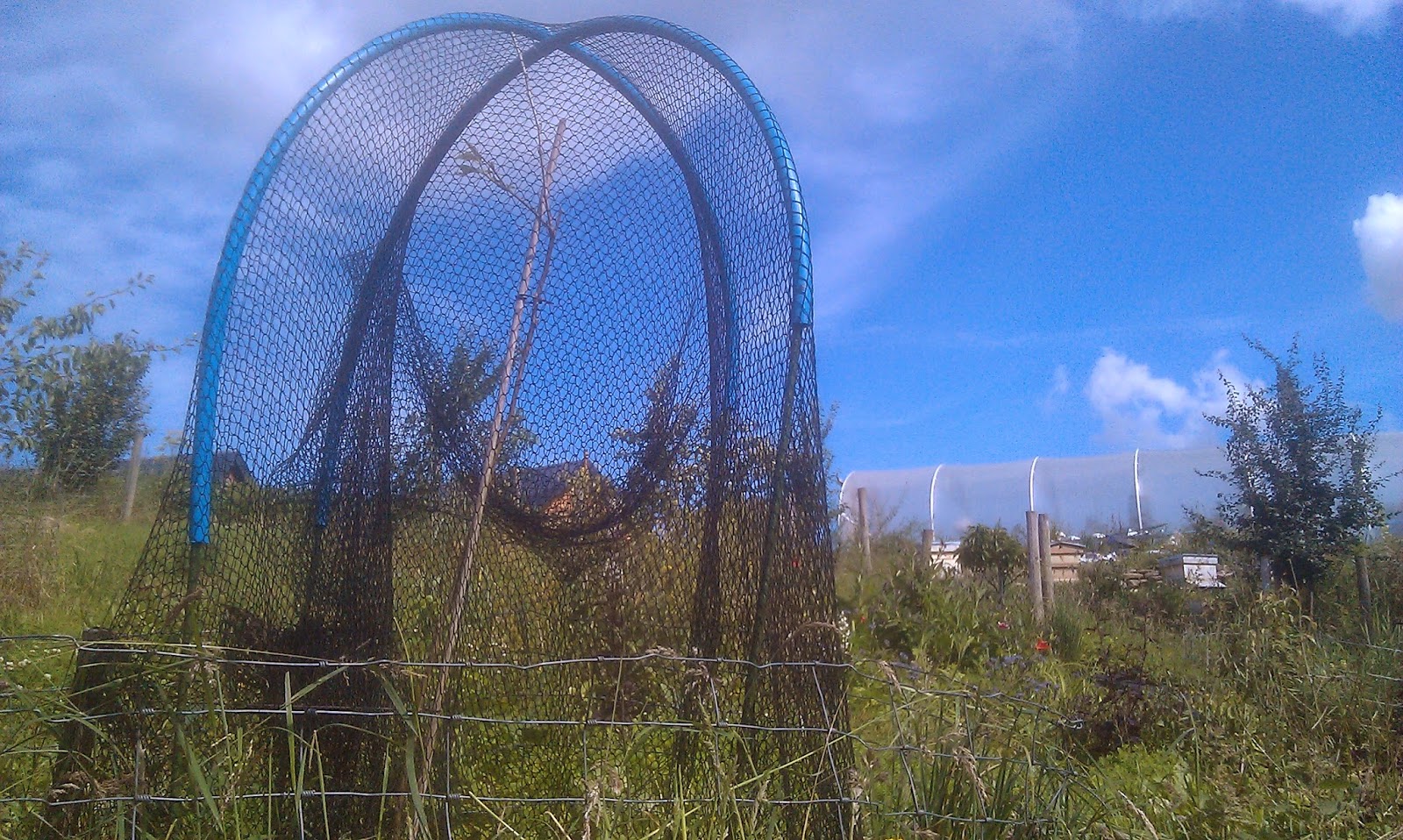
After a difficult few years of very cold springs and late frosts, the orchard is finally coming to fruition this year. I admittedly have lost a plum, but it was not too painful because I have four others, including an impressively fecund drooper, plus three damsons, a greengage, and a couple of feral suckers I got from a sucker's garden in Bradford-on-Avon. Some of my cherries are still intact, but I suspect they'll prove popular with the birds and won't last much longer. An avalanche of apples is also on the cards, but my two pear wouldn't make much of a hand at poker, but I call that a success at this stage.

Some of my experimental fruits are not quite so promising. This my mulberry, a hybrid Canadian variety perhaps suited to the northerly climate.


Maybe so, but not coming into leaf till June leaves itself a lot to do in a short season, and it gets no sympathy from the looting bullfinches and alpinista slugs that have taken a shine to the buds and leaves over everything else in the garden. Three chewed up leaves on a two-metre long stick is not much to show for three years' effort. Now the problem has been diagnosed, we may get the green shoots of recovery...

Here's your drought update. To talk in agrohydrometeorological jargon, we've made a slight dent in the anglo-scottish soil moisture deficit.

2014
Snab
Brize
January
34.5
155.2
February
42.5
105.7
March
21.0
56.6
April
23.4
62.7
May
58.1
80.5
June
76.6
47
Half-year total
256.1
507.7

Monday, 23 June 2014

Return of the Weed

Amongst the deluge of derisory name-calling at school, I remember being labelled a "weed". I always took it to mean one of a feeble or weak-willed disposition. It's taken me forty years to think about it but that's a curious colloquialism. Perhaps it is the sense of worthlessness. Of course, it's difficult to believe it these days given such a manly countenance but I've filled out a lot since then. But perhaps those cruel boys (and girls for that matter) knew more than I did. Sure, they weren't referring to a thuggish nature of couch grass or the smothering tendency of chickweed, and definitely not the unbearable plainness of pineapple mayweed, but perhaps they saw a delicate beauty that stood out from the crowd. 

Back from a week in Orkney, amongst the waist-high mass of the usual suspects, I'll be finding space to save some of the uninvited interlopers that perhaps remind me of surviving against the odds amongst much tougher species. I would never pull up a heartsease...

while I'll overlook the odd campion, corn chamomile, corn marigold, mallow and common fumitory...
And in this weed sanctuary, I am even nurturing some introduced weeds.Somewhere amongst this sea of self-seeded phacelia are six young blueberry bushes. But it's such a popular buzz with the pollinators that I can't bring myself to remove it, even though the garden is littered with the stuff. Not sure where this sentimental streak appeared from.

Tuesday, 3 June 2014

Much of a mulchness


2014
Snab
Brize
January
34.5
155.2
February
42.5
105.7
March
21.0
56.6
April
23.4
62.7
May
58.1
80.5

We finally got a bit of rain but finished the month with four scorching days in a row. So everything is going rampant, and that includes the dreaded chickweed. But after a few years of battling, I think I am getting the upper hand. 

Anything that doesn't like the competition or likes consistent available water is given a head start by growing through black plastic. Here you see my garlic, beyond that will come my celeriac, and then the strawberries. Onions and shallots get the same treatment. 
 
The edible-berry-hedge to the left (Amelanchier alnifolia and Aronia Melanocarpa, if you're asking) sits in a bed of bracken litter scavenged from the forests during the winter. (Well, what else is there to do?). Likewise the gooseberries, while the ever-expanding blueberry patch prefers pine needles. 

Any defiant chickweed that makes it through against the odds finds out out why it is so named and, along with an unfortunate assortment of slugs, wireworms and leatherjackets, succumbs to the resident pesticides.

Tuesday, 20 May 2014

Lay of the Land

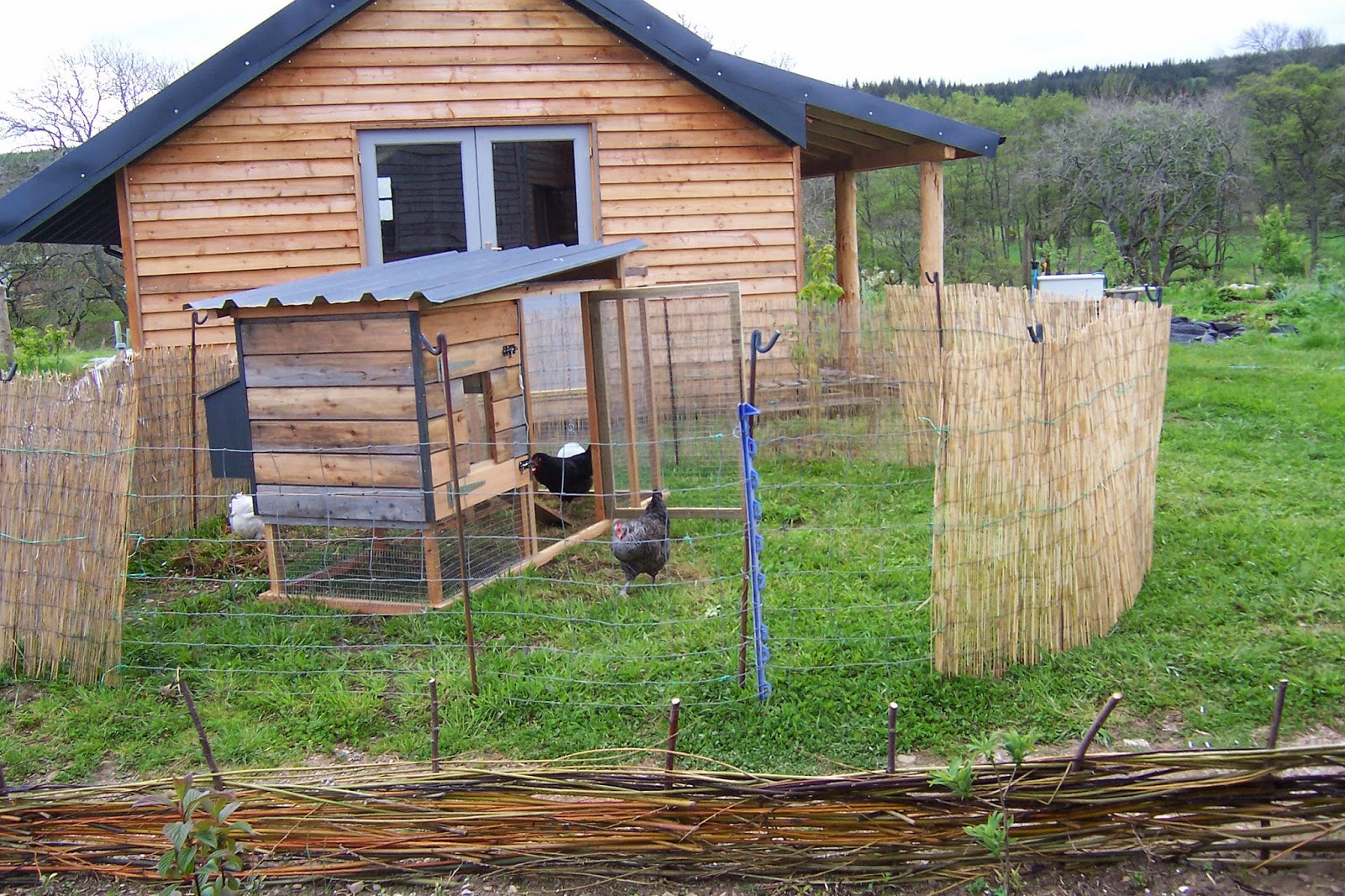
We have some new arrivals. 
Fowl Challenge

Their home is functional made from various bits of recycled construction waste (*exemption applied for) with no thought of aesthetics.


And there is no room for sentimentality here.These are food producers not pets and it is ill-advised to name your hens. But it is more important to relive past glories and celebrate revered figures from world history. Clockwise from bottom left: Benjamin, McGoldrick, Gilbert, Morley.

Monday, 5 May 2014

And the drought goes on...


2014
Snab
Brize
January
34.5
155.2
February
42.5
105.7
March
21.0
56.6
April
23.4
62.7

When the plot starts to resemble a beach, it's time to resort to maritime plants, quite littorally. Asparagus and chard are adaptations of shore plants. A more unusual choice is sea kale. It's a native perennial and you may find its blanched stems emerging from your local shingle bank but you can mimic this by use of force. 

At a time of relative dearth, it gives a crunchy treat with a sweet cabbagy flavour. Use raw, in spring stir-frys, and with a squeeze of lemon on pasta. Remove the chimney pot and it develops an attractive rash of white flowers, worth a place in the flower border, if you go in for such conformist concepts.


Sunday, 13 April 2014

Productive Working Environment


Welcome to my office. It's one of those typical brisk Scottish spring days - bright but the wind is blowing the tea out of the cup. So my flexible work pattern kicks in and I'm hotdesking on some new projects indoors.  With the windward door firmly closed, it's approaching 30degC in here. The place might look like it has a low utilisation rate but it's keeping up a supply of highly billable spinach, salad leaves, coriander and radish. Work in progress includes early potato shoots, strawberries in flower, and embryonic apricots. The cape gooseberries have overwintered and even the forecast for the formerly forlorn hardy kiwis is looking up. But top of my key performance indicators this week is my cauliflower pakora. That's not a bookie's pencil by the way. 

Stan's CauliMore
 

This Weather Widget is provided by the Met Office

This Weather Widget is provided by the Met Office